 Türkçe
 English
 Français
 Русский
 中文 (中国)

Best Cities in Turkey for Foreign Investment: Istanbul, Antalya, Izmir
By: Burak Ünal
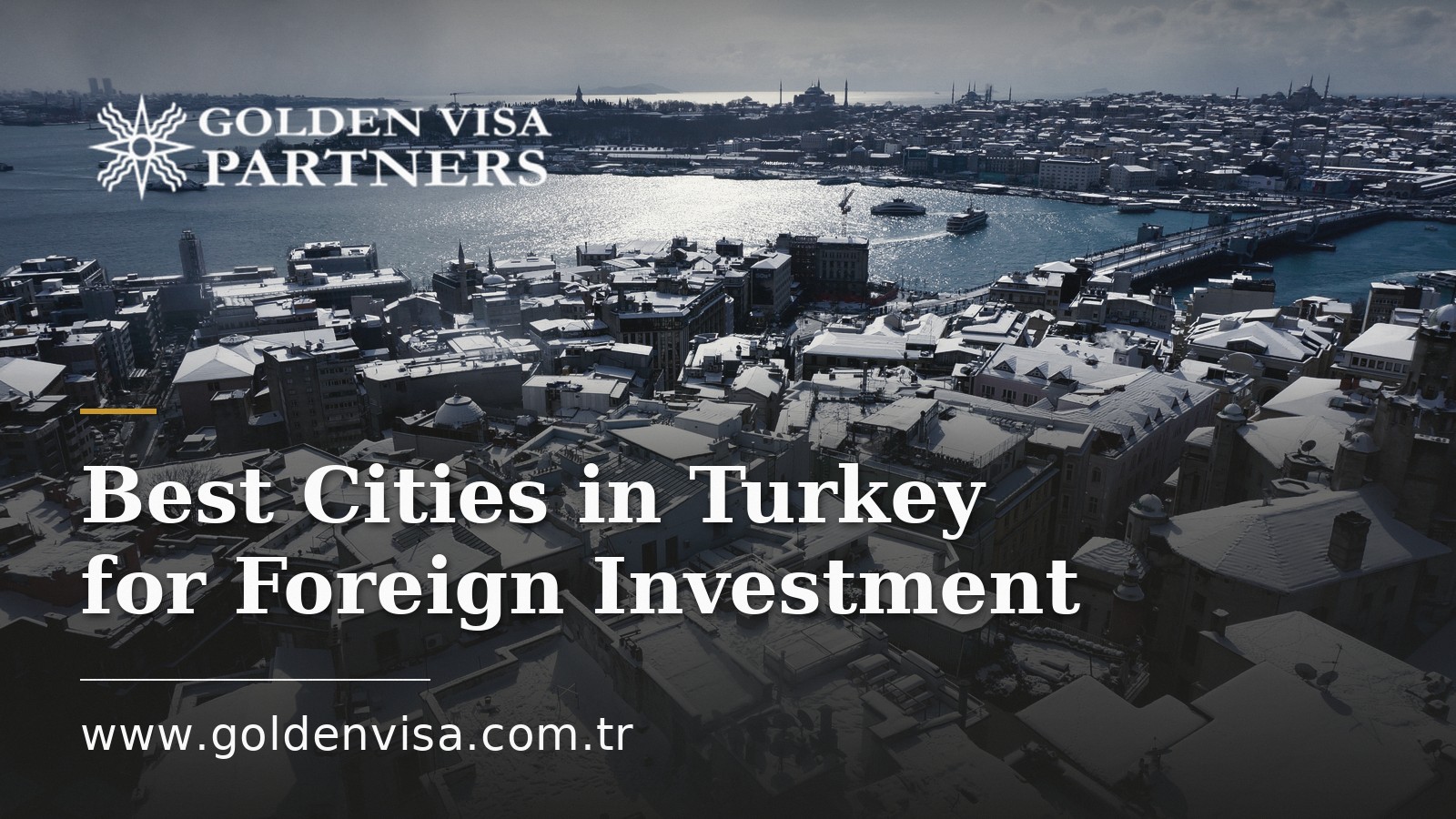
When people ask about the best cities for investment in Turkey, three names come up most often among real estate buyers: Istanbul, Antalya and Izmir. Each suits a different investor profile: Istanbul offers scale and liquidity, Antalya delivers tourism-driven rental yield and strong foreign demand, and Izmir balances an affordable entry price with quality of life. This guide compares the three cities on return potential, cost and citizenship or residence requirements, with concrete criteria to help you decide.
Best Cities for Investment in Turkey: An Overview
The best cities for investment in Turkey depend on what you are trying to achieve. If you want rental income and fast resale, Istanbul stands out. If you want seasonal rental demand and a deep pool of foreign buyers, Antalya is the stronger case. If you want a reasonable entry price with steady appreciation, Izmir is worth a closer look. As an independent consultancy that has worked with more than 2,000 citizenship and residence clients since 2018, we see that the right city is rarely the most expensive one; it is the one that matches the purpose of the investment.
We cover each city in turn below. The figures reflect general market conditions as of 2026; because real estate prices and rental yields shift quickly between neighborhoods, confirm current numbers with an advisor before committing capital.
Istanbul: Scale, Liquidity and Rental Demand
Istanbul is Turkey's largest real estate market, and real estate investment in Istanbul means access to the widest tenant pool and the strongest resale liquidity in the country. With a population above 16 million, constant internal migration and its role as the country's commercial center, rental demand holds up through the year, so vacancy risk is generally lower than in seasonal markets.
For investors, the city splits roughly in two. On the European side, districts such as Basaksehir, Bagcilar and Esenyurt offer more accessible entry prices and newer housing stock, while central areas such as Kadikoy, Atasehir and Sisli carry higher prices per square meter alongside stronger value retention. As of 2026, gross rental yields in central locations typically run between 4% and 6% a year, with somewhat higher yields available in outlying districts.
Istanbul's drawback is entry cost: the same budget buys a larger or more central property in Antalya or Izmir. In exchange, buyers targeting Turkish citizenship by investment through the $400,000 real estate route will find Istanbul offers the widest range of qualifying projects at that budget.
Antalya: Tourism Returns and Foreign Demand
Antalya investment opportunities are shaped mainly by short-term, tourism-driven rental demand and a second-home market geared toward retirement buyers. The share of foreign buyers in Antalya's housing sales has run above the Turkish national average for years.
The Konyaalti and Lara coastal areas see strong demand for sea-view apartments, while Belek and Side are concentrated in the golf and resort segment. Daily or weekly rentals in the summer months can produce a noticeably higher gross yield than a standard annual lease, but that return is seasonal and depends heavily on occupancy. Vacancy risk over the winter months runs higher than in Istanbul's year-round market.
Antalya also draws buyers from dozens of countries, which makes it comparatively easy to reach an international pool of resale buyers. At the same time, coastal price growth has accelerated in recent years, so choosing your entry point carefully and avoiding overpriced projects matters more here than elsewhere.
Izmir: Balance, Quality of Life and Appreciation
Izmir combines an affordable entry price with steady appreciation, making it a balanced option. Izmir real estate investment suits buyers who want neither Istanbul's density nor Antalya's seasonality. The city has both a large domestic market and the quality of life associated with the Aegean coast.
Alsancak and Bornova see steady rental demand tied to a large student population, while Cesme and Urla attract higher-end holiday and second-home buyers. As of 2026, Izmir's price per square meter generally sits below that of Istanbul's central districts, which means the same budget buys a larger or better-located property. That makes Izmir an attractive entry point for investors balancing long-term appreciation against rental yield.
Izmir's drawback is a smaller resale market than Istanbul's. Liquidity is usually adequate, but finding a buyer for a top-tier property can take longer.
Comparing the Three Cities
The table below summarizes the main criteria to weigh when choosing among the best cities for investment in Turkey. The values reflect general 2026 market observation and are meant to show direction rather than exact figures.
| Criterion | Istanbul | Antalya | Izmir |
|---|---|---|---|
| Standout profile | Scale and liquidity | Tourism and foreign demand | Balance and quality of life |
| Entry cost | High | Medium to high (higher on the coast) | Medium |
| Rental demand type | Year-round | Seasonal, high potential | Steady, balanced |
| Resale liquidity | Very strong | Strong (international buyers) | Medium to strong |
| Best suited to | Portfolio growth, citizenship | Seasonal rental, second home | Long-term appreciation |
Buying Process and Due Diligence for Foreign Investors
Whichever city you choose, a foreign buyer's purchase process follows the same basic steps: selecting the property, obtaining a tax identification number, a mandatory valuation (ekspertiz) report in most cases, and the official transfer at the land registry office. The general rules on foreign ownership of real estate in Turkey are administered by the General Directorate of Land Registry and Cadastre (TKGM).
In practice, files most often stall over paperwork and payment. Before purchase, check whether the title deed carries a mortgage or lien, whether the building has its occupancy permit (iskan), and whether the valuation report matches the sale price. If citizenship is the goal, you will also need documents proving the payment moved through a bank in the buyer's own name.
Working with a licensed real estate advisor is the most practical way to run these checks up front rather than discovering a problem after signing.
How Real Estate Connects to Citizenship and Residence
Real estate is the most common route to citizenship by investment in Turkey, and foreigners who purchase property above a set threshold can pursue both residence and citizenship outcomes. As of 2026, the minimum investment for Turkish citizenship by real estate is $400,000, with a commitment not to sell the property for at least three years; this amount and its conditions are subject to regulatory change and should be confirmed before you apply. For official details, see the Presidency of the Republic of Turkey Investment Office.
We cover why this route draws so much international interest in our guide to why Turkey is a hotspot for citizenship by investment. If you are weighing Turkey's real estate route against other programs, our guide on how to choose the best citizenship by investment program for you walks through the comparison criteria, and our overview of the best countries for citizenship by investment for entrepreneurs is useful if you are also considering business-based routes.
To be direct: real estate investment alone does not ensure citizenship or approval, and no outcome can be promised in advance. Source-of-funds declarations, an eligibility review and a valuation report are part of every application, and the outcome depends on the individual file.
Risks and Costs to Watch
A successful investment in any of the three cities requires accounting for costs beyond the sale price. At purchase, expect a title deed fee, a valuation report fee, and translation and notary costs; during ownership, expect property tax, building maintenance fees and upkeep. As of 2026, the title deed fee is calculated on the declared value and is customarily split between buyer and seller; rates can change, so confirm the current amount before the transfer. Rental income is taxed in Turkey, and foreign investors should also factor in their own country's tax obligations.
Currency fluctuation is both an opportunity and a risk for foreign investors: the currency you use to calculate your return changes the outcome significantly. On project-based sales, also verify the developer's track record, the occupancy permit status and a clean title deed. Be cautious of sellers who promise guaranteed rental returns; no honest advisor can promise a return in advance.
Sharing these costs transparently, by city and by segment, is central to how we work as an independent, country-agnostic advisor. To work out which city fits your budget and goals, you can request a free consultation.
Frequently Asked Questions
Can foreigners buy real estate in Turkey?
Yes, foreign nationals can buy residential and commercial real estate in Turkey, with limited exceptions such as military zones. The purchase is completed through an official transfer at the land registry office, and a mandatory valuation report is required in many cases. Because restrictions can vary by nationality, it is worth confirming your specific situation before starting the process.
What is the minimum investment for Turkish citizenship by real estate?
As of 2026, the minimum amount for Turkish citizenship through real estate is $400,000, with a commitment to keep the property for at least three years. Because this threshold and its conditions can change with regulation, confirm the current rules before applying.
Is Istanbul or Antalya better for investment?
It depends on your goal: Istanbul suits year-round rental demand and high liquidity, while Antalya suits tourism-driven seasonal returns and a large pool of foreign buyers. Izmir sits between the two for investors who want steady appreciation alongside an affordable entry price.
Do foreign investors pay tax on rental income in Turkey?
Yes, rental income earned in Turkey is taxed under local law and must be declared. Many investors are also subject to tax rules in their home country; double taxation treaties can change the outcome, so it is worth consulting a tax advisor.
Can you know in advance what return a property investment will generate?
No. Rental yield, appreciation and resale timing depend on market conditions, location and timing, and no investment's return can be known in advance. Be cautious of sellers who claim to guarantee a return, and base your decision on an independent assessment.
How long does it take a foreign investor to complete a property purchase in Turkey?
When paperwork is complete, the title transfer can often be finished within a few weeks; the tax identification number, valuation report and banking steps affect this timeline. A citizenship application is a separate and longer process from the property purchase itself, so it is worth confirming the full timeline with an advisor under current 2026 conditions.
Disclosure: This article is for general information only and does not constitute legal, tax, immigration or investment advice. Programs and amounts can change; confirm current details and your personal eligibility with a qualified advisor before acting.
Disclaimer: Golden Visa Partners is an investment and immigration advisory firm; it does not provide legal or attorney services. The investment amounts, timelines and program conditions on this page are for general guidance only and, because regulations change quickly, may be out of date. Before making any decision, we recommend consulting current official sources and obtaining independent legal and financial advice.
Contact Us
We provide clients with end-to-end citizenship, residence permit and investment advisory worldwide.