 Türkçe
 English
 Français
 Русский
 中文 (中国)

Turkish Citizenship for Russians: Payments, Banks and Dual Passports (2026)
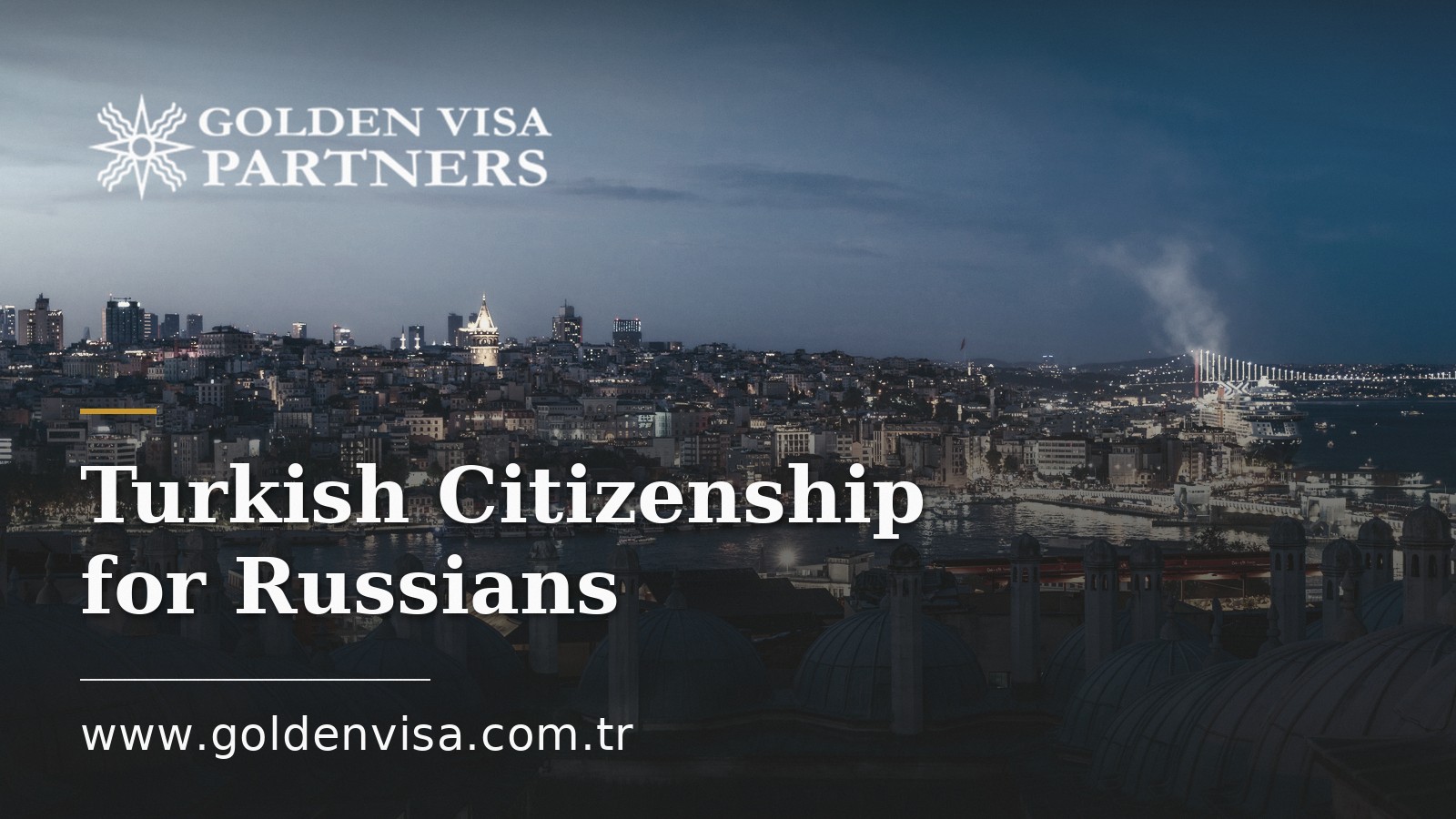
Turkish citizenship for Russians is a direct second-citizenship route obtained by making a set investment, with no residence permit or years-long wait required first. The lowest-cost route is 400,000 USD in real estate, the most common alternative is a 500,000 USD bank deposit, and when payment does not stall the process typically takes six to twelve months.
These amounts and this timeline are current as of 2026, when this article was written, and should be confirmed with an advisor before you apply. For Russian applicants, eligibility is rarely the hard part. The real friction is how to make the payment under sanctions, how to open a bank account in Turkey, and what Russia's dual-citizenship notification rules require. This guide walks through all three honestly, in order.
Golden Visa Partners is an independent investment-migration consultancy that is not tied to any single country or developer; since 2018 we have guided more than 2,000 citizenship and residence clients from over 40 countries. In the experience of our director, Burak Unal (Director of Investment and Immigration Programs, licensed Turkish real estate advisor), what has actually changed for Russian clients over the past two years is not the law itself, it is how much tougher the compliance checks on payment and banking have become.
How can Russian citizens obtain Turkish citizenship?
Turkish citizenship for Russians is granted under the legislation governing exceptional acquisition of Turkish citizenship, by making a set investment and committing to hold it for three years. Nationality is not a barrier here: the Turkish program places no separate restriction on Russian citizens, and the same thresholds and documents apply to everyone. Because the program grants citizenship directly, it does not require getting a residence permit first and waiting years.
It is worth not confusing the investment route with the residence route; we cover that distinction in our comparison of citizenship or residency for your family. The Turkey-specific process itself falls under our citizenship by investment service.
Turkish citizenship for Russians: investment options and current thresholds
The real estate citizenship route remains the most popular because 400,000 USD is the lowest threshold of five separate investment types available as of 2026. Whichever route you pick, you commit to holding the investment for three years, and selling before that period ends puts your citizenship at risk. The thresholds below are current as of when this article was written; rates and amounts can change, so confirm them through the Presidency of the Republic of Turkiye Investment Office and with your advisor before applying.
| Investment type | Minimum amount (2026) | Core condition |
|---|---|---|
| Real estate | 400,000 USD | 3-year no-sale commitment, appraisal report |
| Bank deposit | 500,000 USD | Held at a Turkish bank for 3 years |
| Government debt instruments | 500,000 USD | 3-year holding period |
| Fixed capital investment | 500,000 USD | Ministry-approved investment |
| Employment generation | 50 people | Job creation, social security registration |
Turkish citizenship by investment requires more capital than the Caribbean programs, but in exchange it leaves you with real estate or an interest-bearing asset in a large, durable economy. If you want to compare thresholds across routes, our comparison of all seven Turkish citizenship by investment routes lays the numbers out side by side.
Payments: sanctions and the reality of transferring funds
For Russian applicants, the most critical stage is getting the investment amount into Turkey legally and in a documented way. Because some Russian banks have been removed from SWIFT, and because of international sanctions, direct transfers often cannot be completed, or are bounced back by correspondent banks. That does not mean the program is closed to Russians; it means the payment route has to be planned carefully from the start.
In practice, documenting the source of funds is not enough on its own; the funds are expected to arrive through an institution outside the scope of sanctions, with a traceable chain. Because of the obligations Turkish banks and the Financial Crimes Investigation Board (MASAK) operate under, transfers whose source cannot be explained, or that appear linked to a sanctioned asset, can be blocked. That is why it is far easier to settle in advance which account the funds will come from, in which currency, and with which documents, than to fix it after the sale contract is signed.
Honestly, this is where most delays happen: even when the file itself is ready within weeks, getting the bank's approval for the payment can take days or even weeks. No advisor can promise in advance that a given bank will accept a transfer; the honest approach is to test a few routes ahead of time and prepare the client for possible refusals.
Opening a bank account in Turkey as a Russian citizen
Opening a bank account in Turkey is a required step for paying for real estate and for the deposit route, but for Russian citizens it has recently required more documentation and scrutiny. The first step is getting a Turkish tax number, which can be obtained with a passport from the tax office or through the e-Devlet portal.
When opening an account, banks generally ask for a passport, a declared address in Turkey, a tax number and documentation of the source of funds. Some banks apply extra compliance checks to Russian-national customers, and not every branch accepts every profile; this is an individual banking decision that weighs nationality alongside professional background and the source of funds. Acceptance of Russian-issued Mir cards in Turkey has also narrowed, so a local bank account in Turkey is a practical everyday necessity.
In our experience, the point where account opening most often stalls is missing or inconsistent documentation: an address declaration that does not match the passport, or a source-of-funds explanation that does not meet the bank's standard. Our guide on banking and document hurdles for sanctioned-country applicants covers a very similar set of obstacles. Planning this step before applying can shave weeks off the whole passport process for Russian citizens.
Dual citizenship: Turkey's and Russia's rules
Turkey's and Russia's dual citizenship rules work quite differently, so it helps to separate the two sides clearly. Turkey allows dual citizenship, so you do not have to give up your Russian citizenship to become a Turkish citizen. Turkish law recognizes multiple nationality, and investors keep their existing nationality while acquiring a second passport. The flexibility that holding two passports gives for travel, business and a plan B is the main motivation for many Russian clients.
On the Russian side, dual citizenship is not banned by Russian law, but there is an important notification duty: Russian citizens are required to notify the relevant authority (the migration service) within a set period after acquiring a second citizenship or permanent residence abroad. Failing to file this notification can carry administrative, and in some cases criminal, consequences in Russia. Turkey does not file this notification for you; it is entirely a personal obligation under Russian domestic law, and the current deadline and procedure must be confirmed with a Russian lawyer.
Process and timeline
Start to finish, the process generally takes six to twelve months under 2026 conditions, as long as payment does not stall. The rough order is: eligibility and source-of-funds review, tax number and bank account, making the investment (appraisal and title deed for real estate), obtaining the eligibility certificate, the residence permit application, and finally the citizenship application decision.
- Preparation (2-4 weeks): passport, source-of-funds documents, tax number, bank account.
- Investment (2-6 weeks): real estate appraisal and title transfer, or placing the deposit.
- Application and decision (4-9 months): eligibility certificate, residence permit and the citizenship file reaching a decision.
These timeframes are indicative and can lengthen depending on caseload, missing documents and payment approval. No stage can be promised a particular outcome or duration; the calendar depends on each client's own file.
What to watch out for
The three most common risks are these. First, an incomplete real estate appraisal or an inflated value: if the licensed appraisal report does not meet the 400,000 USD threshold, the file is rejected. Second, being unable to document the source of funds. Third, selling before the three-year holding period ends. The authority of record for title deed and citizenship records in Turkey is the Directorate General of Population and Citizenship Affairs (NVI), and it is the source to rely on for official information.
The tax side should not be overlooked either: becoming a Turkish citizen does not automatically make you a Turkish tax resident, that depends on residence, but it is worth having a specialist assess your tax position between the two countries. Our aim is not to market a particular country or project; it is to recommend the route that genuinely fits your budget and goal, with its risks explained plainly.
Frequently Asked Questions
Can Russian citizens apply for Turkish citizenship?
Yes. The Turkish citizenship by investment program makes no distinction by nationality, and Russian citizens can apply with the same thresholds and documents as any other applicant. The practical difference is not legal eligibility, it is that the payment and banking steps need more careful planning because of sanctions.
Do sanctions make paying for the investment impossible?
No, but they do make planning the payment route in advance essential. Funds need to arrive from an institution outside the scope of sanctions, with a documentable chain, and transfers whose source cannot be explained can be blocked. No advisor can promise in advance that a specific bank will accept a transfer.
Can a Russian citizen open a bank account in Turkey?
Generally yes, but it requires a tax number, an address declaration and source-of-funds documents, and some banks apply extra compliance checks. Opening a bank account in Turkey is a practical first step for both the real estate payment and the deposit route.
Do I have to give up my Russian passport to become a Turkish citizen?
Not on the Turkish side; Turkey allows dual citizenship and you keep your existing nationality. On the Russian side, dual citizenship is not banned by Russian law, but the second citizenship must be reported to the relevant authority; confirm the current deadline and procedure with a Russian lawyer.
How long does the process take?
Under 2026 conditions, generally six to twelve months if payment goes smoothly. The timeline varies with missing documents, appraisal, and especially how quickly payment approval comes through, and no stage can be promised a fixed calendar.
What is the lowest investment amount for Turkish citizenship?
As of 2026, when this article was written, the lowest route is 400,000 USD in real estate; deposit, bond and fixed-capital options start at 500,000 USD. Amounts can change, so confirm them with an official source and your advisor before applying.
If you would like us to assess your file against these three critical points, payment, banking and notification, you can reach us through our contact page for a free initial consultation with a single senior advisor.
Disclosure: This article is for general informational purposes only and does not constitute legal, tax, immigration or investment advice. Programs and amounts can change; confirm current details and your personal eligibility with a qualified advisor before taking action.
Disclaimer: Golden Visa Partners is an investment and immigration advisory firm; it does not provide legal or attorney services. The investment amounts, timelines and program conditions on this page are for general guidance only and, because regulations change quickly, may be out of date. Before making any decision, we recommend consulting current official sources and obtaining independent legal and financial advice.
Contact Us
We provide clients with end-to-end citizenship, residence permit and investment advisory worldwide.